
FIX: You need permission to perform this action – Cannot Delete Folder or File (Solved)
On a Windows 10/8/7 or Vista based computer, the following error appears when trying to delete a folder or file: "Access Denied – You need permission to perform this action. You require permission from SYSTEM or Administrators to make changes."
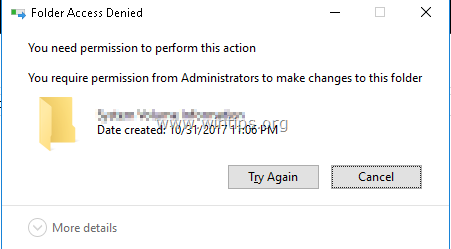
The "folder access denied – you need permission to perform this action" issue occurs because the folder or the file that you want to delete is locked by a process or a system service or because the file/folder is essential for Windows' operation.
In this tutorial you 'll find detailed instructions to resolve the following problems in Windows 10/8/7 or Vista OS:
-
- " You require permission from SYSTEM to make changes to this folder…"
- " You require permission from Administrators to make changes "
- " Cannot delete file. Cannot read from the source file or disk "
- " Cannot delete Folder. Directory Not Empty "
- " Folder Access Denied. You need permission to perform this action"
How to Fix: You need permission to perform this action.
Method 1. Delete the Folder/File that you cannot delete in Safe Mode.
The first method to resolve "Access Denied" problems when deleting a folder or a file in Windows OS, is to delete the folder from Windows Safe Mode. To do that:
1. Simultaneously press the Windows  + R keys to open the 'Run' command box.
2. In run command box, type msconfig press Enter to open the System Configuration utility.
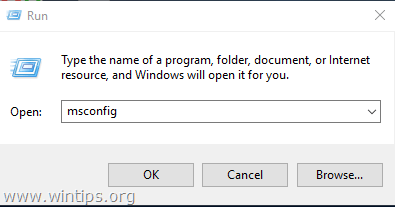
3. At the Boot tab, check the Safe Boot option and hit OK.

4. At the next window, click Restart.
5. In Windows Safe Mode, try to delete the folder/file.
6. Then, open the System Configuration utility (msconfig) utility again and uncheck the Safe Boot option. Hit OK to re-start Windows normally.
Method 2. Use Unlocker to delete a locked folder/file.
1. Download and Install* the latest Unlocker version from here.
* Note: At 'Unlocker Setup' options, click Advanced and uncheck the "Install Delta Toolbar".
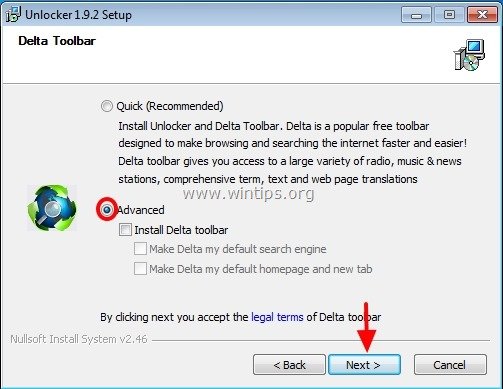
2. When the installation is completed, right click at the folder/file that you cannot delete and select Unlocker.

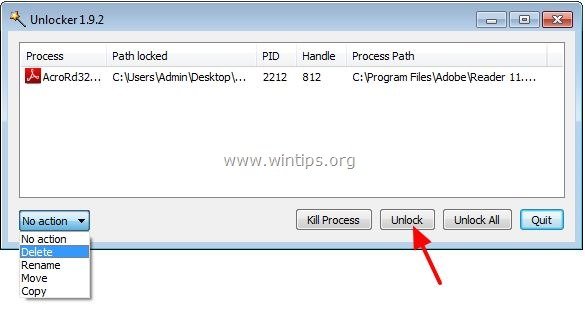
3. At Unlocker window choose Delete and click Unlock. *
* Note: If the file is locked by a process, then click Kill Process.
Method 3. Change Folder's Owner.
Another method to bypass the "You need permission" problem, is to change the Owner of the folder. To do that:
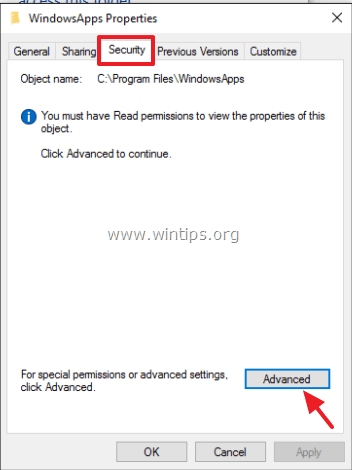
1. Right click at the folder or file that you cannot delete and select Properties.
2. Select the Security tab and click Advanced.
3. Click the Change Owner.
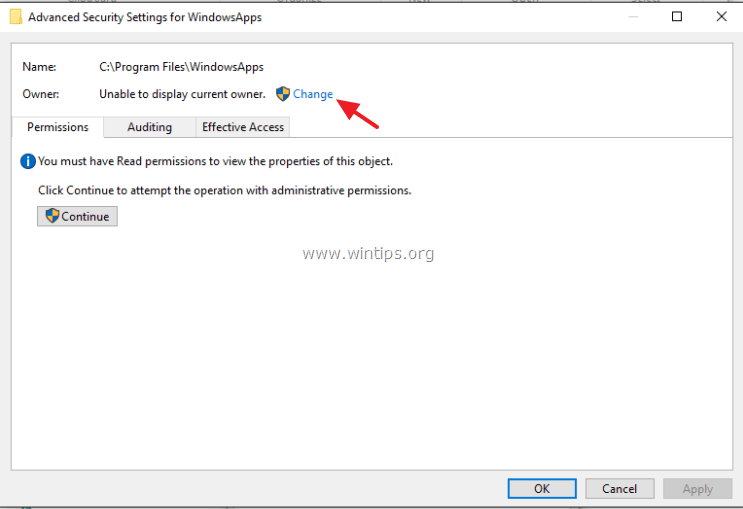
4. Type your account username (e.g. "Admin") and click OK.

5. Check the "Replace owner on subcontainers and objects" checkbox and click OK. Then click OK again to close security settings.

6. Now try to delete the folder.
Method 4. Delete the folder from Command Prompt.
1. Open Command Prompt as Administrator.
2. Take the ownership permissions for the folder that you want to delete, by typing this command:
- takeown /F "Full_Path_Folder_Name" /r /d y
Sample: At this example we 're going to delete the "C:\Folder1", so the command will be:
-
- takeown /F "C:\Folder1" /r /d y
3. Then give this command to take full control permissions at the folder that you want to delete:
- icacls "Full_Path_Folder_Name" /grant Administrators:F /t
Sample: For this example the command will be:
-
- icacls "C:\Folder1" /grant Administrators:F /t
4. Finally type the following command to delete the folder:
- rd "Full_Path_Folder_Name" /S /Q
Sample: For this example the command will be:
-
- rd "C:\Folder1" /S /Q

That's it! Let me know if this guide has helped you by leaving your comment about your experience. Please like and share this guide to help others.


- Remote Desktop (RDP/RDS) Stops Working After September 2026 Windows Update: How to Fix - September 15, 2026
- Windows 11 KB5124008 Causes No Sound or USB Audio Code 10: How to Fix - September 14, 2026
- Copilot Missing or Grayed Out in Outlook: How to Fix - September 10, 2026


July 24, 2025 @ 10:42 am
Method 4 worked perfectly.
Thank you for sharing your expertise.
Hopefully, you are as successful as you deserve to be.
Super work.
thanks again.
March 30, 2023 @ 11:45 am
Method 4 worked for me thanks alot
August 15, 2022 @ 3:33 am
Thanks for the help. The first solution worked for me.
July 1, 2022 @ 5:20 am
Method 4 works for me. Thank you so much!
April 1, 2022 @ 7:17 am
Rebooting in safe mode is the only thing that worked after an hour of trying to fix with permissions. Thanks!
October 17, 2021 @ 10:49 am
method 1 works perfectly to me, thanks so much for sharing
October 14, 2021 @ 2:48 am
Thanks for the tips! Method 1 was just what I needed.
July 5, 2021 @ 3:23 am
method 3 worked for me. thanks sir.
January 24, 2021 @ 7:11 pm
Method 4 worked for me
March 10, 2020 @ 11:45 am
Thanks a lot method 3 is perfect for me
January 19, 2020 @ 6:28 am
Thanks for the tip. Method 4 worked!
October 18, 2019 @ 4:41 pm
Thank you sir. Method 4 worked on my computer.
May 6, 2019 @ 7:08 am
Worked, thank you very much! Tried lots of other options, even booting into safe mode, etc. Thanks again!
October 3, 2019 @ 8:35 am
@Bob
What option/method number did you use to make it work…??